
Tips for Determining the Location and Number of Wheels
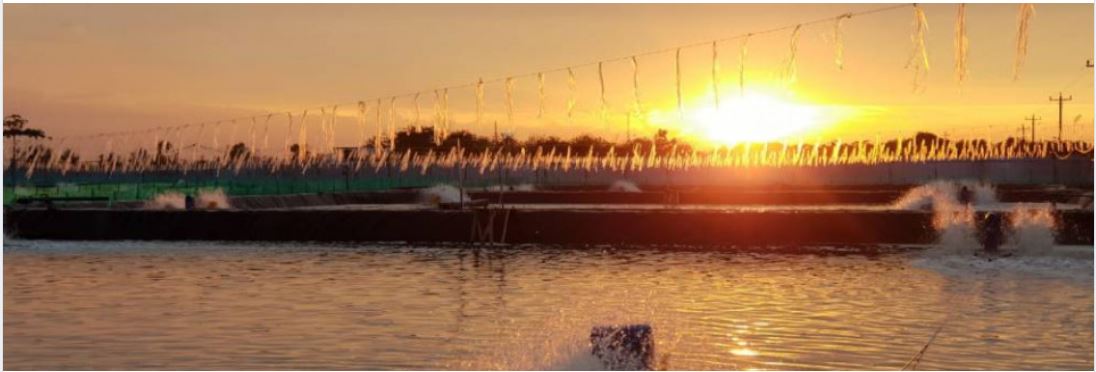
One of the important things in shrimp farming is a sufficient source of oxygen in the form of DO ( Dissolved Oxygen ). Sufficient supply of oxygen in pond water so that the shrimp get a sufficient supply of oxygen for their metabolic needs. Aerator or pond water wheels is a tool that can help increase oxygen levels in pond waters. Apart from being the best oxygen supplier in the pond, the windmill also has many other functions, such as cleaning the surface area of the water and the bottom of the pond pond water so as to create a stable current while cleaning the bottom of the pond so that it is good for shrimp growth and health.
However, among some farmers, there are still many who ask, how many windmills are needed? How is the layout of a good mill so that the yield of crop yields is maximized?
Determining the Number of Wheel Needs
The main function of the wheels is to supply oxygen to the shrimp. To find out the number of mills needed, it is also necessary to know the total shrimp biomass, at least an estimate of the existing total shrimp biomass because it is quite difficult to know the exact number. Once known, then adjusted to the supply capacity of the wheel. A wheel with a power of 1 HP ( Horse Power or commonly known as PK) ideally supplies up to 500 kg of shrimp, while a 2 HP wheel can supply oxygen up to 1 ton of shrimp. Calculation simulation:
Shrimp farms intensive systems with pond area of 1000 m 2 stocking density of shrimp 100 individuals / m 2 or by the number of shrimp tails 100,000. The assumption is that the target is harvested when the shrimp is at size 50 (average weight of shrimp/ABW: 20 grams) and the survival rate (SR) reaches 100%.
Total biomass:
100,000 shrimp x 20 grams/shrimp = 2,000,000 grams or 2,000 kg
Number of pinwheels:
2,000 kg : 500 = 4 (wheel 1 HP)
2,000 kg : 1,000 = 2 (2 HP wheel)
Or to determine how many mills must operate, it is also determined from the prediction of the total biomass at that time. For example, with the same number of stockings, the results of the last sampling of shrimp were at size 100 (mean shrimp weight/ABW: 10 grams) and the survival rate (SR) reached 100%.
Total biomass:
100,000 shrimp x 10 grams/shrimp = 1,000,000 grams or 1,000 kg
Number of pinwheels:
1,000 kg : 500 = 2 (wheel 1 HP)
1,000 kg : 1,000 = 1 (wheel 2 HP)
Fundamental Tips for Arranging a Ferris wheel in a Shrimp Pond
The layout of a good wheels in the pond is very relative or depends on the number and position of the direction of the wheel and also the area of the shrimp pond owned. However, the most basic thing to know is that the rotation of the fan on the waterwheel is expected to produce water currents that can level the quality of pond water vertically and horizontally.
Here are tips to consider when setting up a pinwheel in a shrimp pond:
- Use a wheel that has proven quality, many domestic and foreign mill manufacturers offer good quality and cheap.
- Also pay attention to the basic material of the dynamo or waterwheel machine, whether it is rust-resistant or not. Try to choose a stainless steel.
- Also pay attention to the combination of the direction and position of the waterwheel on a shrimp pond plot, the combination must be able to produce a whirlpool that is able to direct the dirt at the bottom of the pond towards the disposal of pond water (middle or side depending on the construction of the pond), so that pond water conditions remain healthy.
- Pay attention to the construction of the waterwheel support poles in the pond, the waterwheel support poles must be strong and stable.
- The position and direction of the waterwheel set in the pond is very dependent on the shape or design (map) of the existing pond, so the location and direction of the wheel can be different in each pond.
- The number of mills that will be used must consider the age and density of the shrimp population in the pond.
Under certain conditions in the shrimp pond plot, the number of pinwheels can be adjusted to the level of shrimp demand, as described previously. What must be considered is that a high shrimp density requires a larger number of wheels than a lower shrimp density. If the shrimp is still in the frying stage, the number of pinwheels used is usually less than for large shrimp.