The meaning of “Independent Campus” in the Policy of “Free Learning” ala Mendikbud Nadiem
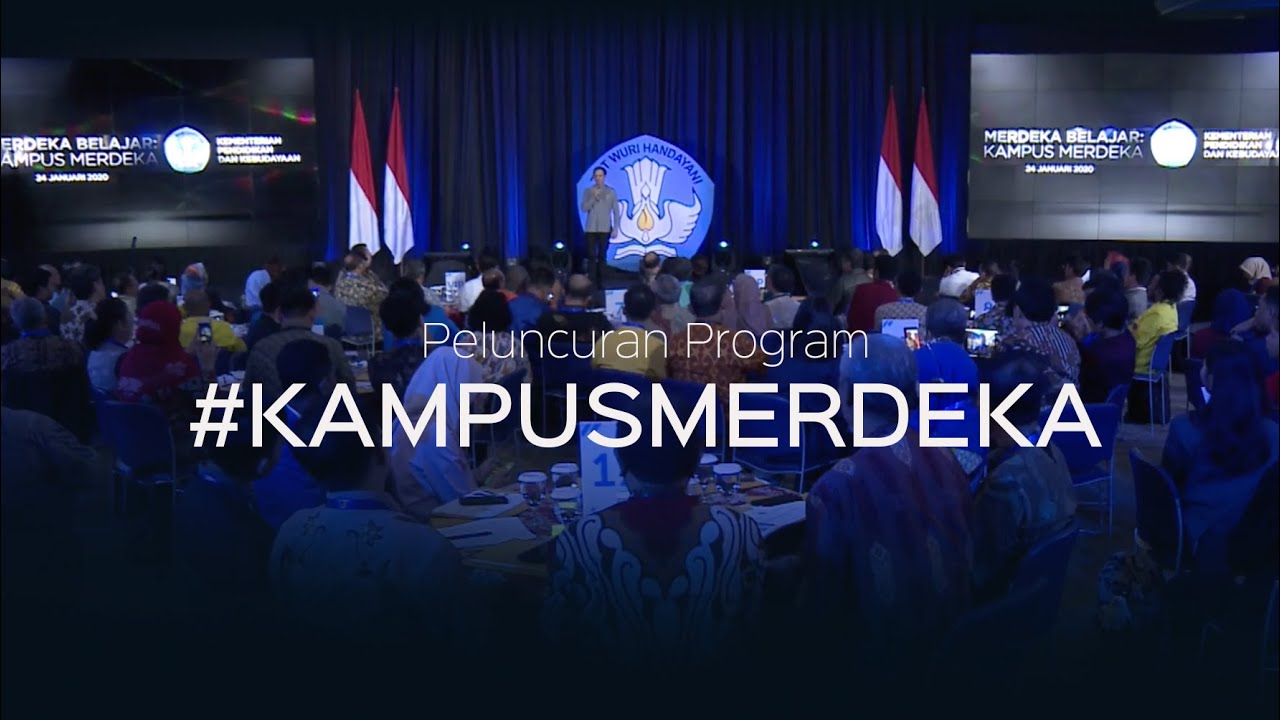
Minister of Education and Culture (Mendikbud) Nadiem Anwar Makarim launched the Freedom of Learning policy for higher education with the title “Free Campus” this week ahead of the Chinese New Year.
Nadiem emphasized that the Freedom Campus policy is a continuation of the concept of Free Learning. Its implementation is most likely to be carried out immediately, only to change ministerial regulations, not to change government regulations or laws.
This Independent Campus policy package is the first step in a series of policies for higher education. This is the initial stage to release the shackles to make it easier to move. “We still haven’t touched the quality aspect. There will be several matrices that will be used to help universities achieve their targets, “he said. So what does the independent campus mean?
- Autonomy for State Universities (PTN) and Private (PTS)
Namely autonomy to open or establish new study programs (prodi). This autonomy is given if the PTN and PTS have A and B accreditations, and have collaborated with organizations and / or universities that are included in the QS Top 100 World Universities. The exceptions apply to health and education study programs. The Minister of Education and Culture added, “All new study programs will automatically get C accreditation”. Furthermore, the Minister of Education and Culture explained that cooperation with organizations would include curriculum preparation, work practices or internships, and work placements for students. Then the Ministry of Education and Culture will work with universities and study program partners to conduct supervision. “The tracer study is mandatory every year. Higher education is obliged to ensure this is implemented, “said Minister Nadiem. - Automatic re-accreditation program
The re-accreditation program is automatic for all rankings and is voluntary for colleges and study programs that are ready to move up the rankings. In the future, the accreditation that has been determined by the National Accreditation Board for Higher Education (BAN-PT) will remain valid for 5 years but will be renewed automatically. Applications for re-accreditation of universities and study programs are limited to no later than 2 years after receiving the last accreditation. Higher education institutions that are accredited B and C can apply for an increase in accreditation at any time. “Later, Accreditation A will also be given to universities that have succeeded in obtaining international accreditation. The list of recognized international accreditations will be determined by a Ministerial Decree, “he added. - Freedom for PTN Public Service Agency (BLU) and Work Unit (Satker) to become PTN Legal Entity (PTN BH).
Kemendikbud will simplify the requirements for PTN BLU and Satker to become PTN BH without being bound by accreditation status. - The right to study for 3 semesters outside the study program
Grants rights to students to take courses outside the study program and make changes to the definition of Semester Credit Units (credits). Higher education institutions are required to give students the right to volunteer, so students may or may not take credits outside their campus for two semesters or the equivalent of 40 credits. Plus, students can also take credits in other study programs on their campus as much as one semester of the total semester that must be taken. This does not apply to health study programs. On the other hand, currently the weight of credits for learning activities outside the classroom is very small and does not encourage students to seek new experiences, especially in many campuses, student exchanges or work practices actually delay student graduationand independent. Furthermore, the Minister of Education and Culture explained that there was a change in the understanding of credits. Each credit is defined as ‘hours of activity’, no longer “study hours”. Activities here mean studying in class, internships or practical work in industry or organizations, student exchanges, community service, entrepreneurship, research, independent studies, or teaching activities in remote areas. Each activity chosen by students must be guided by a lecturer who is determined by the campus. The list of activities that can be taken by students can be selected from programs determined by the government and / or programs approved by the chancellor.